
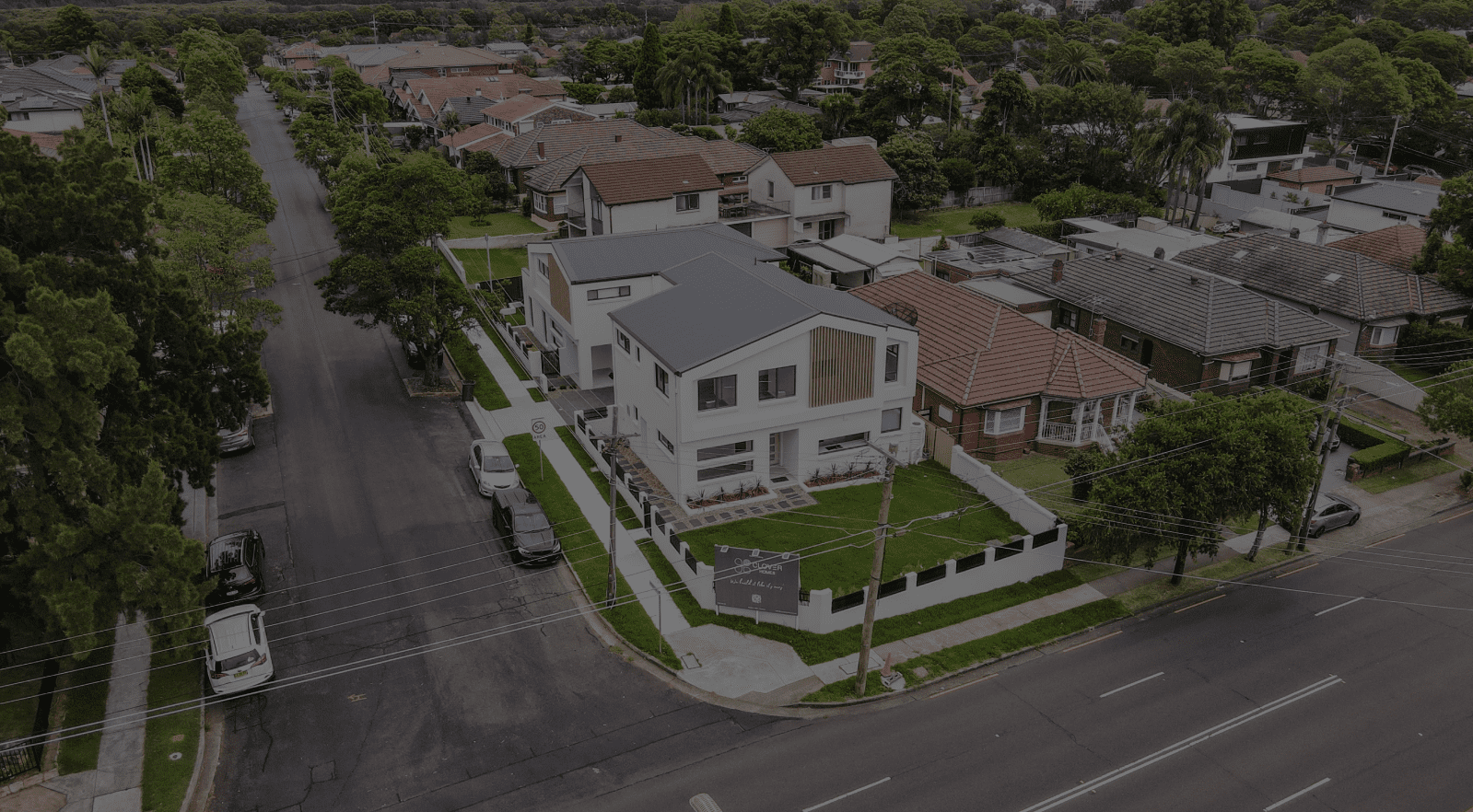
If you own a corner block in Sydney, you are sitting on one of the best types of land to build a duplex on. Two street frontages mean each home gets its own address, its own driveway, and its own front door, which is what separates a well-designed corner block duplex from a building that just happens to have two units in it.
Corner block duplex designs have become one of the most practical ways to get more out of a block you already own. NSW planning laws have opened up duplex development across a wide range of residential zones, giving builders and developers new opportunities to maximise land value on standard suburban blocks throughout the state.
What Makes a Corner Block Different?
A corner block sits where two streets meet, and that one feature changes everything when it comes to duplex design. On a regular block, both homes face the same street, one entry ends up feeling secondary, and the driveways sit side by side. The two homes look and function like a split building because that is what they end up being.
On a corner block, each home can face its own street, use its own driveway, and function like a proper standalone home. That is what a good duplex design looks like, and it is also what councils want to see when they assess a duplex application.
Why Should You Choose A Corner Block Duplex Design
Sydney buyers and renters are not looking for half a home. They want a place that feels genuinely their own, and corner block duplex designs in Sydney are built around that expectation. The design process starts with a full compliance check covering setbacks, frontage, height, site coverage, and parking before a floor plan is ever drawn.
Every corner block is different, and what works on a block in Strathfield will not automatically work in Hornsby or The Hills Shire. Getting the design right for the specific block is what gets a duplex approved without repeated back and forth with the council.
The Real Advantages of Corner Block Duplex Designs in Australia
Corner block duplex designs in Australia consistently deliver outcomes that mid-block lots simply cannot match, and the advantages go well beyond having an extra street frontage.
Independent Driveways
Access from two different streets means each home can have its own driveway and garage without shared access or awkward layouts, and council parking requirements become far easier to satisfy.
Improved Privacy
The layout of a corner block puts natural distance between the two homes, and with the right window placement and screening walls, both dwellings feel genuinely private even where they share a common wall.
Better Access to Natural Light
More exterior wall space creates more opportunity to orient living areas toward north or east sun, and both homes benefit from cross-ventilation that a standard side-by-side duplex on a regular block rarely achieves as effectively.
Stronger Market Appeal
Homes that feel and function like standalone properties attract more interest from buyers and renters, and corner block duplex designs in Australia consistently perform better because of the privacy, the independent parking, and the street presence each dwelling offers.

What You Can Actually Build on a Corner Block
Not every corner block suits the same design, and the right layout depends on block size, frontage length, width, and the specific council rules that apply to the site. Common configurations include side-by-side homes where each dwelling faces a different street, L-shaped designs that follow the block boundary, single-storey options suited to wider blocks, and double-storey layouts that increase floor area without sacrificing yard space. Most designs incorporate private outdoor spaces, garages, and alfresco areas for each dwelling.
Sloping blocks, and compact corners are all workable with the right approach to design from the start, and the key is matching the layout to what the block genuinely allows rather than forcing a standard plan onto a site it was never designed for.
Corner Block Duplex Designs in Sydney and How Approvals Work
There are two ways to get a duplex approved in NSW, and understanding both helps you move forward with confidence. A Complying Development Certificate, or CDC, is the faster path. When the design meets all the set standards under the Low Rise Housing Diversity Code, a private certifier can approve it within 20 business days, making it a clean and efficient outcome for the right block and the right design.
A Development Application, or DA, goes through council and takes a minimum of 40 to 60 days, often longer in practice. A DA provides more flexibility when the design or the site does not fit neatly within the standard rules, and a variation is needed to make the project work.
Corner blocks can use the secondary street to satisfy the frontage requirement, which gives them a clear advantage over a regular home build. Each home must face a public road, include at least one off-street parking space, and sit within a height limit of 8.5 metres and two storeys. Some areas, including Hawkesbury, Blue Mountains, and Wollondilly, operate under different rules due to bushfire and flood risk, so confirming your specific block on the NSW Planning Portal and with your council’s Local Environmental Plan is an essential step before committing to anything.
What Homeowners Do with a Corner Block Duplex
Sydney homeowners who build a corner block duplex generally pursue one of three outcomes. The first is living in one dwelling and renting out the other, using the rental income to offset mortgage repayments and get more value from a block they already own. The second is subdividing into two separate titles and selling each home independently, which delivers a strong return when the design and the location are right. The third is multi-generational living, where parents and adult children, or siblings, share a property on the same block while maintaining full privacy and independence from one another.
Mistakes to Avoid with Corner Block Duplex Designs
Corner blocks carry setback requirements on both street frontages, not just one, and this catches many homeowners off guard because the actual buildable area can be significantly smaller than the total block size suggests. Getting this assessed early is one of the most important steps in the process.
Skipping a feasibility check before committing to a design is a costly mistake because zoning, council controls, easements, drainage, and slope all determine what can actually be built on the site. Blocks that were subdivided recently may also have duplex restrictions under certain local plans, so this needs to be confirmed before purchasing a lot with the intention of developing it.
Two street frontages are a genuine advantage, but they do not override heritage listings, flood zone designations, or bushfire risk classifications, and every block needs to be assessed on its own merits before any design or approval work begins.
Why a Specialist Builder Makes the Difference
Corner block duplexes require a builder who understands how to read a block and design around its specific constraints, not one who applies a standard plan and hopes it fits. Clover Homes designs and builds corner block duplexes across Greater Sydney, including Hornsby, Ku-ring-gai, Northern Beaches, Strathfield, The Hills Shire, Inner West, Sutherland Shire, Parramatta, Blacktown, Ryde, Canterbury-Bankstown, Liverpool, and Western Sydney growth areas.
Every project begins with a compliance check against both state and local planning rules, and the design is developed around the specific block rather than adapted from a catalogue. Both CDC and DA pathways are managed in-house, covering approvals, design, and construction through to handover. Homeowners receive a fixed-price quote with realistic allowances, weekly site updates throughout the build, and a design team focused on delivering the best long-term outcome. Every duplex Clover Homes builds is designed to look and function like two separate homes, because that is what performs best for owners, renters, and future buyers alike.
Frequently Asked Questions
What is the minimum block size for a corner block duplex in Sydney?
Corner blocks can use the secondary street to satisfy the frontage requirement, and your local council plan may apply additional conditions, so checking your specific block before proceeding is an essential first step.
Can I build a duplex on a corner block in NSW?
Yes. Corner blocks are well-suited to duplex development because each dwelling can face its own street, satisfying the NSW requirement that no home sits behind another on the same lot. Dual occupancies are now permitted in R2 Low Density Residential zones statewide, making corner blocks in established Sydney suburbs more viable than ever for this type of development.
Do I need a DA or CDC for a corner block duplex?
The right pathway depends on the block and the design. A CDC is the faster option and applies when the project meets all prescribed standards, while a DA is required when variations are needed or when the site is in an area where complying development is not available. A duplex specialist can assess your block and confirm which path is appropriate.
What are the setback rules for corner block duplexes in NSW?
Corner blocks are subject to setback requirements on both street frontages, which affects the total buildable area on the site. Height is generally capped at 8.5 metres and two storeys under the Low Rise Housing Diversity Code, and each dwelling must include at least one off-street parking space.
Can I subdivide a corner block duplex into two separate titles?
Subdivision into Torrens or Strata titles is possible in many cases; whether this applies to your specific block depends on the local council plan and the site conditions that apply to the development.
Which Sydney suburbs work well for corner block duplex development?
Properties zoned R1, R2, R3, or RU5 across NSW are eligible for duplex development, and councils including Hornsby, Ku-ring-gai, and the Northern Beaches now permit it where restrictions previously applied. The NSW Planning Portal allows you to confirm the zoning and applicable planning controls for your specific address before taking any further steps.
Is a corner block duplex better than a mid-block duplex?
In most cases, yes. Two frontages allow for separate addresses, independent driveways, better natural light, and stronger privacy between the two dwellings, and these factors consistently lead to better rental returns and stronger resale results compared to a standard mid-block side-by-side duplex arrangement.
Ready to Unlock Your Corner Block?
Great homes start with the right team. Clover Homes covers design, approvals, and construction across Greater Sydney.