
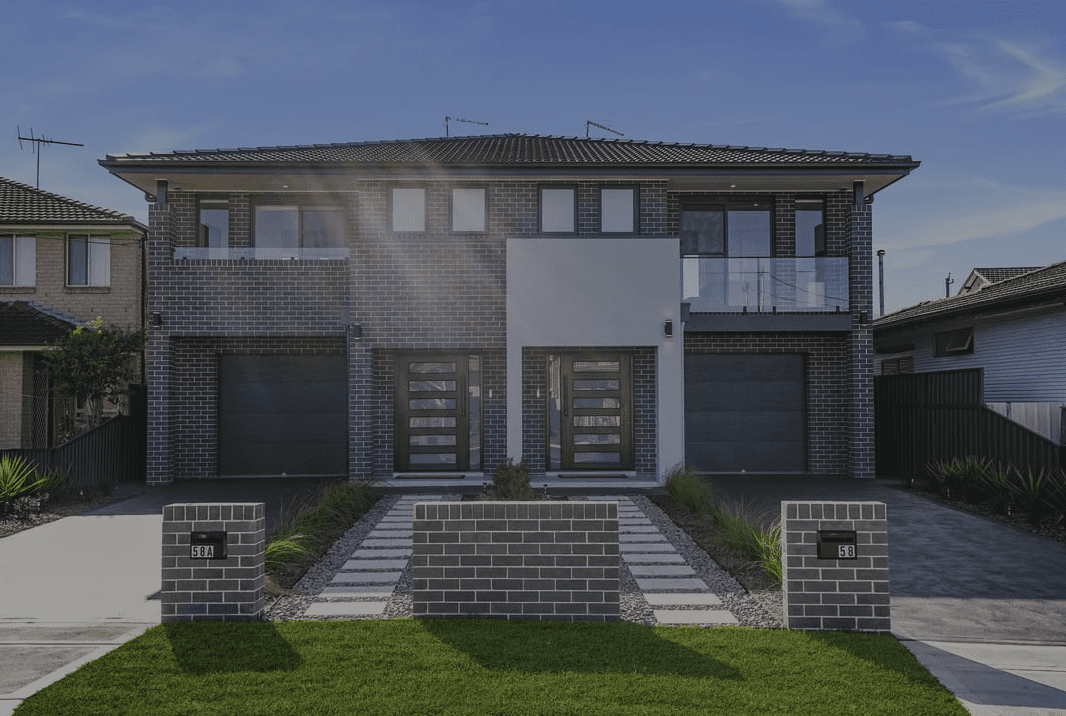
Most Sydney homeowners look at their block and see one home. What they do not always see is the opportunity to build two full-sized homes on that same piece of land, each with multiple bedrooms, its own living spaces, its own garage, and its own backyard. Double storey duplex designs make that possible, and they do it without needing a larger block. Going up instead of out is one of the smartest ways to get more out of the land you already own.
Whether you are looking to house extended family, generate rental income, or develop and sell, a double storey duplex gives you the floor space of a proper family home on each side, built on a block that would otherwise hold just one.
What Is a Double Storey Duplex?
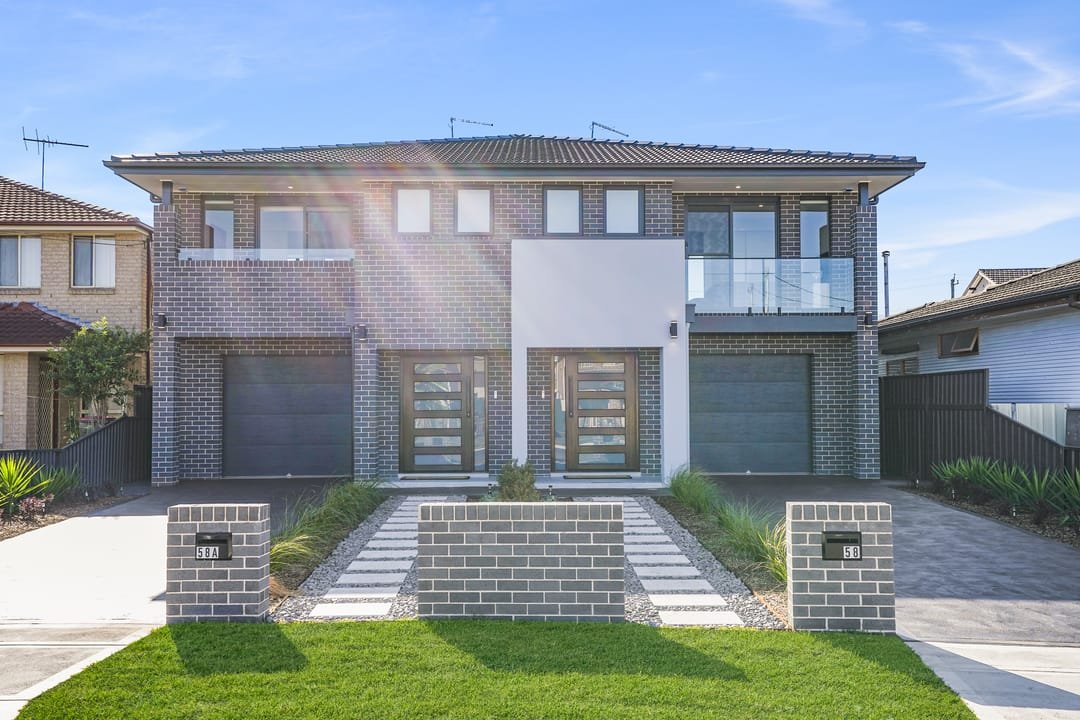
A double storey duplex is two homes built side by side on one block of land, with each home spanning two levels. The ground floor typically holds the main living areas, kitchen, and garage, while the upper floor carries the bedrooms, bathrooms, and additional living space. The two homes share one dividing wall but are otherwise fully independent, each with its own entrance, its own outdoor area, and its own title if subdivided.
This type of build suits Sydney well because blocks in established suburbs are often not large enough for two single-storey homes sitting side by side, but they are perfectly sized for two homes that go upward. The design solves the space problem by using the vertical space that is already available.
Why Double Storey Duplex Designs Work So Well On Sydney Blocks
Sydney blocks come in all shapes and sizes, and double storey duplex designs are built to work with that variety rather than against it. The struggle to fit two single-storey homes side by side becomes much more workable when the design goes up. Sloping blocks that would normally require expensive earthworks can be handled with split-level layouts that follow the natural fall of the land. This design benefits from having two street-facing facades, one for each home, which gives both dwellings a strong street presence and independent access.
The key advantage is that going two storeys allows each home to have a generous floor plan without eating up all of the outdoor space. Ground floor living areas open out to private backyards or alfresco areas, while the upper level keeps bedrooms away from the noise of the street and the shared living zones below. This separation of spaces is one of the main reasons double storey duplex designs in Sydney consistently attract strong interest from families, owner-occupiers, and investors alike.
The Types of Double Storey Duplex Designs Available
Duplex double storey designs are shaped by the block, the council requirements, and what the owner needs from the finished homes. Here are the most common configurations available.
- Side-by-Side with Mirrored Layouts
Each home is a mirror image of the other, sharing a central dividing wall. This is the most straightforward layout for standard blocks, and it gives both dwellings equal floor space, equal outdoor area, and a consistent feel throughout.
- Side-by-Side with Different Floor Plans
Each home has a slightly different layout to suit different needs or to make the most of the block orientation. One side might have a larger ground floor living area while the other has an extra bedroom upstairs, which works well when one home is for the owner and the other is for a family member or tenant.
- Designs for Sloping Blocks
Split-level layouts step down with the natural fall of the land, avoiding large amounts of fill or cut. This approach also opens up opportunities for higher ceilings, larger windows, and balconies that take advantage of elevated views across the site.
What Makes a Good Double Storey Duplex Design?
The difference between a duplex that gets approved and performs well on the market and one that causes problems comes down to how well the design was thought through from the start. Several things matter more than most people realise before they begin.
Living spaces face the right direction
Orienting ground-floor living areas toward the north or east means both homes get good natural light throughout the day. This reduces the need for artificial lighting and heating and makes the homes more comfortable to live in year-round.
Bedrooms are positioned for privacy
Upper floor bedrooms should be located away from the street and from the neighbouring dwelling’s living areas. Good window placement and the right setbacks between properties protect the privacy of both households.
The dividing wall meets fire and acoustic standards
The shared wall between the two homes must meet the requirements of the National Construction Code for both fire separation and noise reduction. This is a non-negotiable part of any duplex build and needs to be designed correctly from the start, not added as an afterthought.
Parking works for both homes
Each home generally needs at least one off-street parking space. This usually means a single garage per dwelling integrated into the ground floor. Getting parking right early avoids costly redesigns later in the approval process.
Outdoor spaces feel private
Each home should have its own usable outdoor area that does not overlook the other dwelling or the neighbour’s property. Screening, fencing, and smart alfresco placement all contribute to making each home feel like a complete and private space.
How Approvals Work for a Double Storey Duplex in NSW
There are two approval pathways available for duplex development in NSW. A Complying Development Certificate, or CDC, is the faster option and can be issued within 20 business days when the design meets all the set standards under the Low Rise Housing Diversity Code. A Development Application, or DA, goes through council and takes longer, but provides more flexibility when the site or the design needs a variation to the standard rules.
For a duplex to be approved in NSW, the block generally needs to meet minimum lot size and frontage requirements, each home must face a public road, and the design must comply with height, setback, parking, and landscaping rules. Some areas have specific overlays for heritage, flooding, or bushfire risk that affect what can be built, so confirming the planning controls that apply to your specific block is an essential first step before any design work begins.
Why Clover Homes for Double Storey Duplex Design in Sydney
Clover Homes designs and builds double storey duplexes across Greater Sydney, including Hornsby, Ku-ring-gai, Northern Beaches, Strathfield, The Hills Shire, Inner West, Sutherland Shire, Parramatta, Blacktown, Ryde, Canterbury-Bankstown, Liverpool, and Western Sydney growth areas.
Every project starts with a compliance check against both state and local planning rules. The design is developed around the specific block rather than taken from a standard catalogue, and both CDC and DA pathways are managed in-house alongside approvals, design, and construction through to handover. Homeowners receive a fixed-price quote with realistic allowances, weekly site updates throughout the build, and a design team focused on delivering the best long-term outcome for both dwellings.
FAQs About Double Storey Duplex Designs
What is a double storey duplex?
Two fully independent homes built side by side on one block, each spanning two levels with its own entrance, living areas, bedrooms, bathrooms, and garage. They share one dividing wall and can be sold separately if the block is subdivided.
What block size do I need for a double storey duplex in Sydney?
Current NSW rules generally require a minimum of 450 square metres and a frontage of around 12 to 15 metres, depending on the council area and approval pathway. Always check your specific block against your council’s Local Environmental Plan before starting.
Do I need a DA or CDC for a double storey duplex?
It depends on the block and the design. A CDC is faster and suits projects that meet all prescribed standards. A DA goes through council and allows more flexibility when variations are needed.
How long does it take to build a double storey duplex in Sydney?
Design and approvals generally take four to eight months. Construction typically takes eight to twelve months from the slab down, depending on the size and complexity of the build.
What is the difference between a duplex and dual occupancy?
Dual occupancy is the planning term for two dwellings on one lot. A duplex is the most common form, referring to two attached homes sharing a dividing wall. The terms are often used interchangeably.
Can a double storey duplex be subdivided into two separate titles?
Yes, in many cases. NSW rules require a minimum of 225 square metres per lot and a 6-metre frontage per lot. Eligibility depends on your local council plan and site conditions.
Can I live in one side and rent the other?
Yes, and it is one of the most common approaches for duplex owners in Sydney. The rental income from one side helps offset the mortgage, and the design can be tailored to suit both an owner-occupier and a tenant.
Ready to Make the Most of Your Block?
Talk to Clover Homes about your double storey duplex build and take the first step toward maximising the value of your property with an experienced team that specialises in duplex construction.