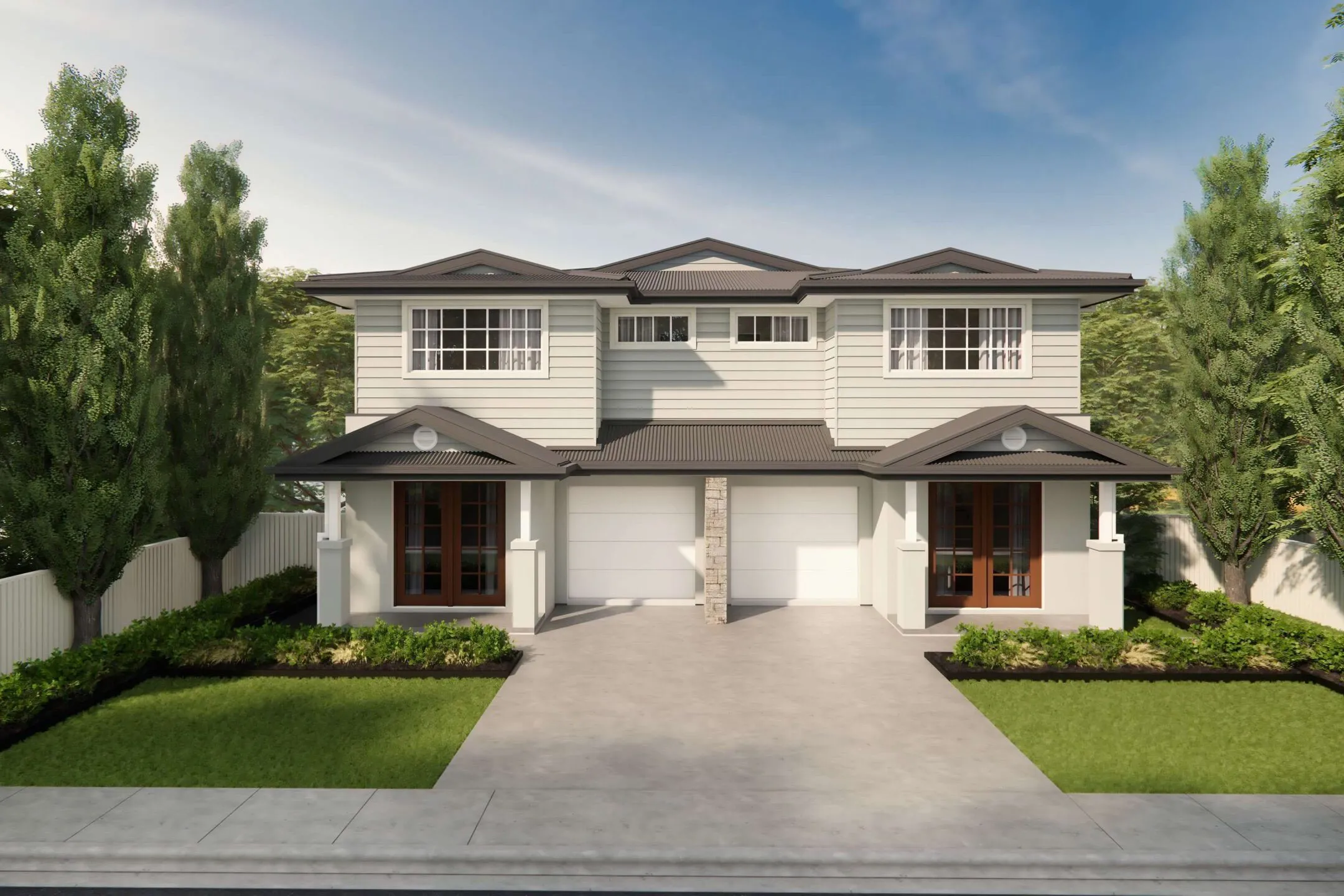
Building a dual occupancy (duplex) in Sydney can unlock serious value: two dwellings on one lot, flexible living, and a second stream of income. The question everyone asks first is the only one that matters: what’s the real cost once approvals, site works and all the “extras” land on the invoice? This guide lays out the numbers, the levers that move them, and the traps to avoid writing for Sydney blocks and NSW rules.
For a straightforward knockdown–rebuild duplex on a relatively flat suburban block, most Sydney owners should allow a build budget in the mid–high six figures per dwelling, plus pre-construction and site costs. The final figure depends on approvals (CDC vs DA), slope/soil, services upgrades, façade and finish choices, stormwater, and council contributions.
What the quick figure usually doesn’t include:
- Surveys, soil testing, engineering and BASIX/NCC compliance reports
- Council/Private Certifier fees, Sydney Water fees, and potential Section 7.11 contributions
- Demolition, asbestos allowances, tree removal and retaining
- Service upgrades (sewer encasement, stormwater detention, electrical, NBN)
- Driveways, fencing between dwellings, letterboxes, landscaping
- Subdivision/strata costs (if applicable)
Want a firm number for your block? Book a free site assessment with Clover Homes and we’ll map your approvals path and line-item the budget before you commit.
Where the money goes: a real cost breakdown
1. Pre-construction & approvals
- Site survey & geotech: Feature/contour survey and soil classification (affects footing design).
- Design & engineering: Drafting, structural engineering, BASIX/NCC energy compliance.
- Approvals path:
- CDC (Complying Development Certificate) if you meet the NSW Code (setbacks, height, site coverage, lot width, flood/BAL etc.).
- DA (Development Application) via council if you don’t meet CDC or you’re in an overlay (heritage, flood, bushfire, sensitive streetscape).
- Certification & contributions: Private certifier, NSW Planning Portal fees, potential Section 7.11 developer contributions.
Locking the approvals path early going from CDC to DA mid-design is one of the fastest ways to blow time and budget.
2. Demolition & site prep
- Knockdown of existing dwelling incl. services capping.
- Asbestos testing and removal (very common in Sydney fibro & eaves).
- Trees & retaining: Tree protection/removal; cut/fill on sloping sites; retaining walls; erosion controls.
3. Services & connections
- Sydney Water: Peg-outs, approvals, possible sewer encasement/relocation near or under the proposed building.
- Stormwater: OSD (On-Site Detention) tanks/pits, charged lines, upgrades for flood-prone lots.
- Electrical & NBN: Capacity upgrades, new meters, conduits, and NBN lead-ins.
4. Construction (structure & finishes)
- Base build: Slab, frame, roof, windows/doors, insulation to NCC.
- Wet areas & kitchens: Tiling, fixtures, joinery, appliances.
- Stairs & façade: Balustrades, feature cladding/brickwork, garage doors.
- Energy & comfort: Higher-spec glazing, extra insulation, solar readiness, EV charging provision.
5. External works & handover
- Driveways & fencing between dwellings, paths, letterboxes.
- Landscaping: Turf, planting, irrigation (often under-allowed).
- Finals: Occupation certificate, warranties, and defects period.
CDC vs DA in Sydney: time, cost, risk
| Factor | CDC (Complying Development) | DA (Development Application) |
|---|---|---|
| Eligibility | Must satisfy NSW Housing Code controls exactly | Used when CDC controls can’t be met or overlays apply |
| Speed | Faster assessment via certifier once docs are ready | Slower council assessment, neighbour notification |
| Design freedom | Tighter dimensions and envelopes are prescriptive | More flexible negotiation possible with council |
| Risk | Lower if you clearly comply | Higher potential RFI cycles, conditions, redesign |
| Fees | Certifier + portal fees, usually lower total | Council fees + contributions more likely/applicable |
Finance & feasibility: will it stack up?
Before you fall in love with a plan, test the project like a small development.
- Inputs to check:
- Build + site + approval costs (complete picture, not just base build)
- GRV (gross realised value) on completion or rental income per dwelling
- Holding costs during approvals and build
- Subdivision/strata costs if you plan to sell separately
- Valuation note: Some lenders treat duplex builds more conservatively until strata is completed.
- Rental reality: Yields differ by corridor Western Sydney and some south-west pockets can outperform blue-chip areas on yield even if resale is lower.
Clover Homes can provide you with a No less than estimate after your site assessment, so you can talk to your broker with clear numbers.
How Clover Homes keeps costs under control
- Fixed-price proposals once we’ve done the surveys, engineering and services checks no guesswork.
- Value-engineered plans that still pass BASIX and NCC without over-spec’ing.
- Local trades and suppliers with reliable lead times, sequenced to cut delays.
- Transparent allowances for kitchens, bathrooms and façade items so you can choose where to spend.
- Stage-gate reviews at design, approvals and pre-construction so any changes happen before it’s expensive.
“Is a dual occ right for my block?” quick checks
- Frontage & lot size: Does your frontage and site area meet CDC or council controls for attached dual occ?
- Slope & soil: Steep or reactive? Plan for retaining and upgraded footings.
- Overlays: Flood planning level, BAL, heritage, significant trees, easements.
- Services: Sewer location vs proposed footprint; stormwater path to legal point of discharge.
- Neighbour context: Streetscape and setbacks especially in character areas.
If 2–3 of these are unknown, start with a site assessment before you commission full design.
Mistakes that blow the budget (and how to dodge them)
- Designing blind: Drawing to ideal rooms instead of CDC/DA rules forces redesign later.
- Skipping early stormwater design: OSD and charged lines appear late and cost more when retrofitted.
- Under-allowing for asbestos: Common in Sydney test early, price it properly.
- Over-spec’ing for rentals: Spend where tenants notice (kitchen, bathrooms, acoustics) and keep the rest durable.
- Ignoring services: Sewer encasements and power upgrades aren’t optional to locate and plan for them before tender.
- Assuming “landscaping later”: Driveways, fencing and turf are part of the handover picture and valuation.
FAQs about Costs to Build a Dual Occ
How much does it cost to build a duplex in Sydney right now?
Budget for a full project number, not just a base build. The end cost is influenced most by approvals (CDC vs DA), site slope/soil, services (sewer/stormwater), façade/spec level, and contributions. After a site assessment, Clover Homes provides a fixed-price proposal so you know where the total will land.
Is dual occupancy cheaper than building two separate houses?
Generally yes, shared walls/roof areas and a single site often reduce total spend compared with two detached builds on two lots. Yield and resale strategy will guide the best approach.
CDC vs DA: which is faster and cheaper in NSW?
CDC is faster and usually cheaper if your lot and design meet the Code exactly. DA gives design flexibility but takes longer and can introduce conditions.
What block size do I need for a duplex in Sydney?
There’s no one number for each council and the NSW Code set minimums for lot width, area, setbacks and height. A quick eligibility screen on your survey will answer this in minutes.
Can I strata or Torrens title subdivide a dual occ?
Often, yes, subject to council controls and services design. Plan subdivision early so services and fire/acoustic ratings align with the end plan.
How long does a duplex build take?
Allow 6–10+ months for construction after approvals, depending on complexity, weather and materials. Add design and approvals time on top.
Do I have to pay Section 7.11 contributions for a duplex?
Sometimes it depends on your LGA and whether the development increases demand on local infrastructure. We’ll confirm this during Pre-construction.
Which Sydney areas give the best rental yield for duplexes?
Yields shift with market cycles. Broadly, outer-ring suburbs can offer higher yield, while inner-ring suburbs may deliver stronger resale. We tailor advice to your suburb.
Next steps
- Free site assessment: We walk your block, check CDC/DA, map services, and give you an indication on budget.
- See our duplex designs: Explore layouts optimised for Sydney lots.
- Our process: How we go from sketches to keys without cost creep.
- Projects: Real Sydney builds with photos and outcomes.
Numbers earn trust when they’re grounded in your block. If you take one thing from this guide, make it this: confirm CDC/DA early, locate services, and price stormwater and sewer before you pick tiles. That’s how Sydney duplex projects stay on budget.